Ignorance is Strength
December 17, 2025

I was not born to bake. I know that because during the past 35 years, I have known many people who truly were born to bake — or to cook.
There was my dear friend, Michel Richard, whom I still miss ten years after his death.
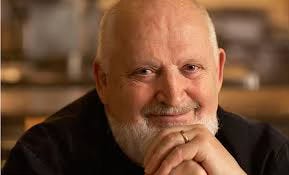
Michel had an extraordinarily difficult childhood. His drunk and abusive father left the family when Michel was very young. His mother went to work in a factory to support her children; Michel began cooking for the family at the age of ten. When his mother remarried, the new husband didn’t want Michel or his siblings, and so Michel was sent to an orphanage.
One day, a friend from the orphanage took him to visit a pastry shop. In the back room he saw bakers rolling carefully cut pieces of dough into croissants. He watched, transfixed. He knew immediately this would be his life.
At fourteen, he signed on as an apprentice in Reims. The job was too small for him, so he filled his evenings cooking dinners for the night staff in the pastry shop. But Michel was too talented to stay hidden. Soon he was discovered by Gaston Lenôtre, one of France’s most celebrated pastry chefs, who made Michel his apprentice and quickly came to rely on him. Lenôtre later sent him to New York to open a pastry shop bearing his name.
I know all this because I saw their relationship firsthand. At an award dinner honoring Lenôtre, the great chef ran to Michel, kissed him on both cheeks, and shouted to the entire room, “Ma meilleur étudiant!” — my best student.
Another friend, Roberto Donna, was born in Turin.
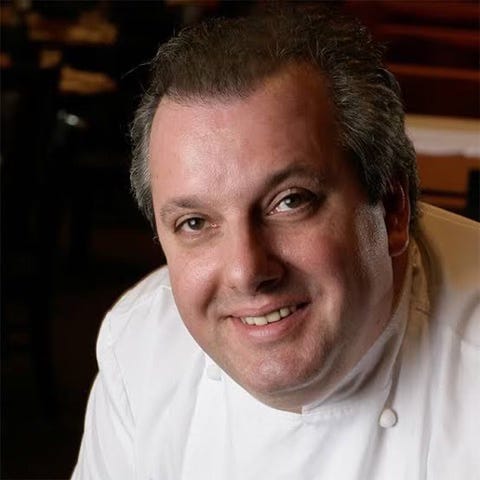
At thirteen he enrolled in culinary school; at nineteen he moved to Washington; and just a few years later he opened Galileo on P Street with a restaurateur who recognized his talent. The tiny restaurant became such a sensation that even President George H.W. Bush had trouble getting a reservation.
And then there was Jean Louis Palladin.
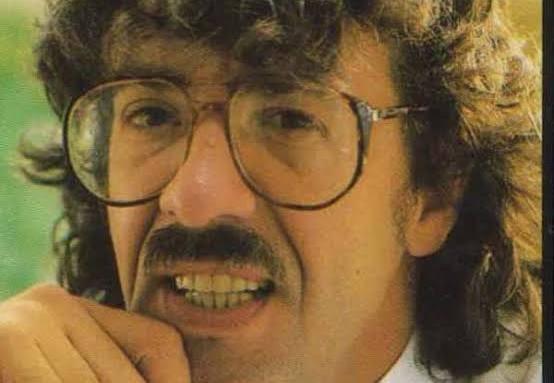
Born in Condom, in the south of France, he went to work in a kitchen at twelve, moved to Toulouse at fourteen, Paris at seventeen, Monte Carlo at eighteen — where he received his first Michelin star. In 1974, at his own hometown restaurant, he became the youngest chef ever awarded two Michelin stars.
He moved to Washington in 1979 to open a restaurant at the Watergate Hotel and became a mentor to an entire generation — including Daniel Boulud and Eric Ripert. I knew him because he was the first person to ask me to bake bread for his restaurant after I opened Marvelous Market in 1990.
I wish I could tell such a story about my own beginnings, but I cannot. I am not saying I wish for a tragic childhood like Michel’s. Nor am I sorry for my years in journalism or government. But I do know I would be a far better baker today had I started in boyhood. I didn’t. As a child, I never dreamed of being a chef or baker. I dreamed of being Edward R. Murrow or a United States Senator. And since I worked for Howard K. Smith and later served on the White House staff for President Kennedy, I consider that close enough.
When I was young, dreaming of becoming a chef was the dream of the hard-scrabbled, not of the middle class. Chefs were not glorified. They did not attend prestigious culinary schools. They entered kitchens through apprenticeship and stayed there. They bought the food, negotiated with suppliers, kept inventory, oversaw the staff — and rarely, if ever, entered the dining room.
There were no celebrity chefs. The phrase would have seemed an oxymoron.
My favorite restaurant in Baltimore was Marconi’s. I knew the menu by heart, but I hadn’t the vaguest idea who the chef was. I didn’t think about the hands preparing the food. That is how little I knew — and how little most people thought — about cooks.
After leaving the White House in 1964, I celebrated by going to Le Pavillon, then the most famous restaurant in New York. I was intimidated by its owner, Henri Soule, whose reputation for hauteur was well known, but it never occurred to me to ask to meet his chef. I had never heard of Pierre Franey, and chefs did not come into dining rooms anyway. Their place was the kitchen, and that is where they stayed.
Years later, in 1991, shortly after Marvelous Market became a sensation in Washington, Miriam Carmack came to see me. She was organizing an evening event at the National Zoo — chefs cooking from booths while visitors wandered the grounds eating and admiring animals. It sounded wonderful, and although I had no special affection for animals, I agreed immediately.
It was wonderful. Before the event opened to the public, the chefs wandered the grounds together, greeting friends, tasting each other’s dishes. I found myself walking with Jean Louis and Roberto, talking casually, when Jean Louis suddenly turned to Roberto and said in his gravelly voice:
“Isn’t this strange? You’ve been in this business since you were 13. I started at 12. And here we are walking with this guy who became a baker — what? Last year?”
I have never forgotten that moment. It put me in my place and forced me to think about how little I once knew about the kitchens and chefs behind the restaurants I loved.
I also realized in the weeks and months after Jean Louis’s comment that I had become a baker only because I knew so little about the craft and the business. I realized that I had opened a bakery that made breads other didn’t make only because I was ignorant. A smarter person, perhaps one who had begun to bake bread at the age of 16, would have known enough to be frightened to open a bakery.
My sister had opened a bookstore knowing a lot about reading, and nothing about business. I opened a bakery knowing a lot about eating, a trace about business, and nothing about making bread.
But Jean Louis was right. I had not been born to bake. I came to it late, naïve, and untrained. And yet baking is where I finally landed — 2among people who had lived their craft since childhood, and who nonetheless welcomed me into their company.
Ignorance is strength.